
Letters
Big thanks to Claire E. Moss (@clairemoss1) for the image prompt. I saw the story in the letters on the floor.

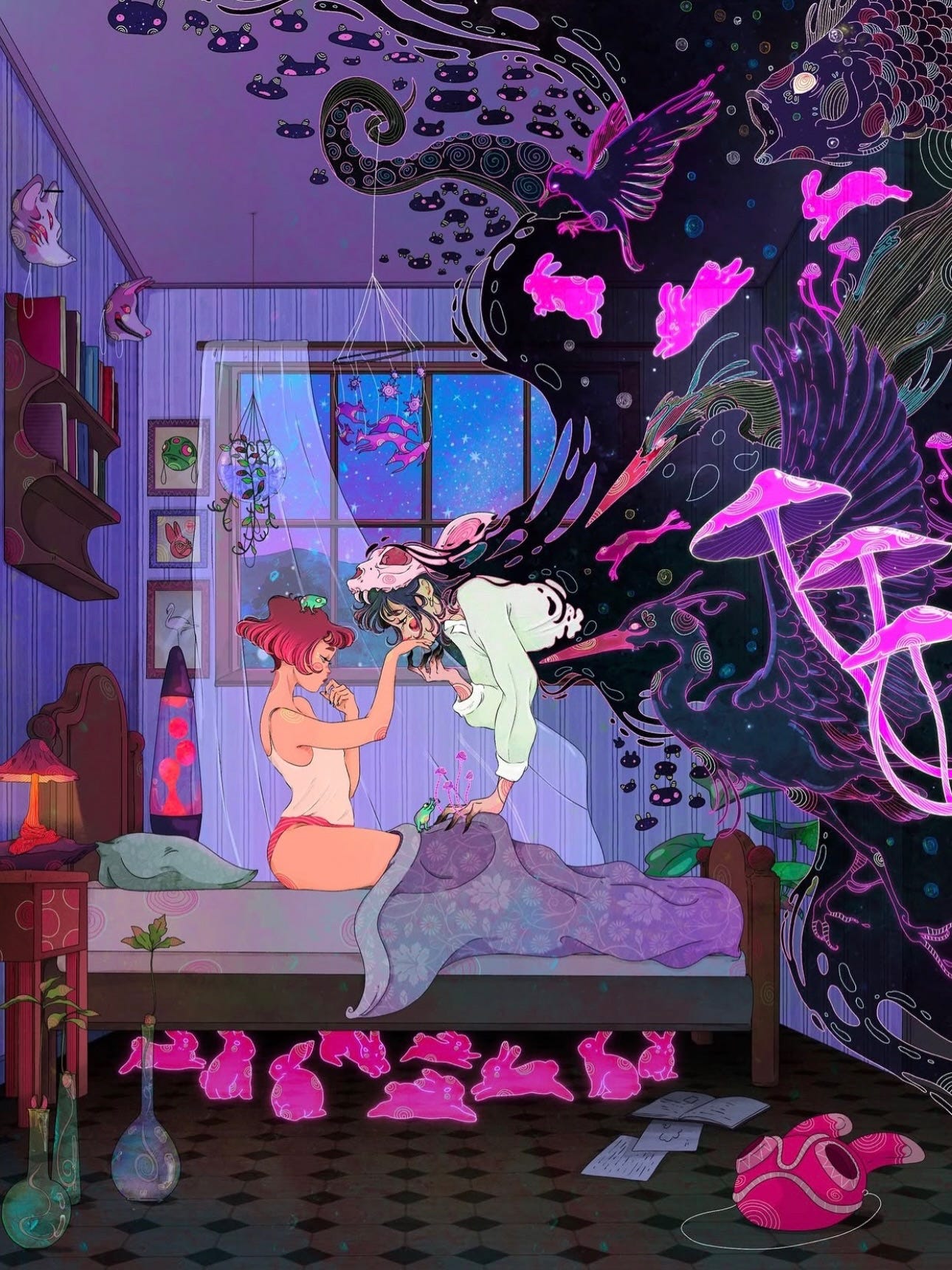
She sat on her bed in her baggy t-shirt and underwear, knees pulled to her chest. The window was open. She always opened it when she dropped because the cold gave her somewhere to put her attention. On the floor by the bed, the papers her mother had sent, where she could see them. Greek. She had not read them. She had been not-reading them for days. On the dresser, the small wooden icon turned to face the wall.
She had been planning this for three days, since the text, and the planning was the thing she could not look at directly, the way the letter on the floor was the thing she could not look at directly, and she had arranged her room around both of them.
She had picked the playlist three nights ago and spent an hour on it. The phone stayed face down on the nightstand.
The cold from the window moved across her back in a slow band. She shivered. She pulled the band of cold over herself like a blanket and stayed inside it.
This was the part she had counted on. The first hour. The hands going soft and the room going useful and her thoughts arranging themselves into rooms she could walk through and close the doors of. She had done this twice before, in the spring, after the breakup, and she had learned what it could do. It could put a thing in a room and close the door.
She looked at the wall.
She let her focus go and the wall became a field. The field was the one behind her grandmother’s house in Kalamata, or the field was the one in the icon, the gold field behind the saint’s head where nothing happened. She walked across the field and the field was fine. The tab had gone soft on her tongue an hour ago. Communion paper. The thought arrived sideways, the way thoughts arrived now, and she let it pass through.
She thought: this is what I came for.
She thought it and the thinking of it was the thing that made it stop working.
The wall came back. The radiator made the sound radiators make, the small tick of metal warming or cooling, and for a second three ticks, then three ticks again. She held her breath. The ticks went on in their three and three. She breathed and they dissolved back into ticks and the radiator was a radiator and the building was a building and she was a girl on a bed.
She was a girl on a bed and her grandmother was in the ground.
The cold band on her back widened. She did not pull the blanket up.
She thought: I can get up. I can put on music. I can go into the kitchen.
She did not get up.
She looked down.
There were marks on the back of her hand.
She closed her eyes. When she opened them they were still there. Small. Dark. Her mother’s handwriting—her mother’s, not anyone else’s, the small careful letters her mother made.
A shape resolved. Then another. She tried not to let them mean, kept her focus loose, willed them to stay as marks, but the marks were already a word and the word was already in her, was the word, and she could not unsee it.
Κοιμήθηκε.
She put her other hand over it.
The word was under her palm. She kept her hand there. She was eight years old and her grandmother’s hand was around her small hand, the two hands the same size, and her grandmother had said papou has fallen asleep, and Iris had known that the words were not the thing, that the words were a small careful door her grandmother was opening for her.
She took her hand away.
The whole sentence was there. Κοιμήθηκε ήσυχα. She fell asleep peacefully. In her mother’s hand, on her own hand, the letters her mother had made on the page on the floor that Iris had not let herself read.
She made a sound.
It was the sound before a word.
She put her hand—the other hand, the unmarked hand—over her mouth.
She sat like that. The lamp made shapes. Her grandmother had fallen asleep peacefully. Iris had not been there.
She took her hand from her mouth.
She got off the bed. Her legs were not steady and she did not trust them and she went to the dresser anyway, three steps, and stood in front of the dresser and looked down at the back of the small wooden icon, the plain unpainted back of it, the back her grandmother had never meant for her to see.
She put her hand on it.
Then she turned it over.
The paint was darker than she remembered, the gold of the halo gone almost brown under the lamp. The eyes were where they had always been. They were not looking at her in the way of a painting that follows you across a room. They were looking at her in the way her grandmother had looked at her across the kitchen, eight years old, before saying her name. The mouth in the icon did not move. Her own name arrived in her anyway, in her grandmother’s voice, the long first syllable her grandmother had always given it.
*** © *** 2026 *** Michael Joseph Adkins ***